






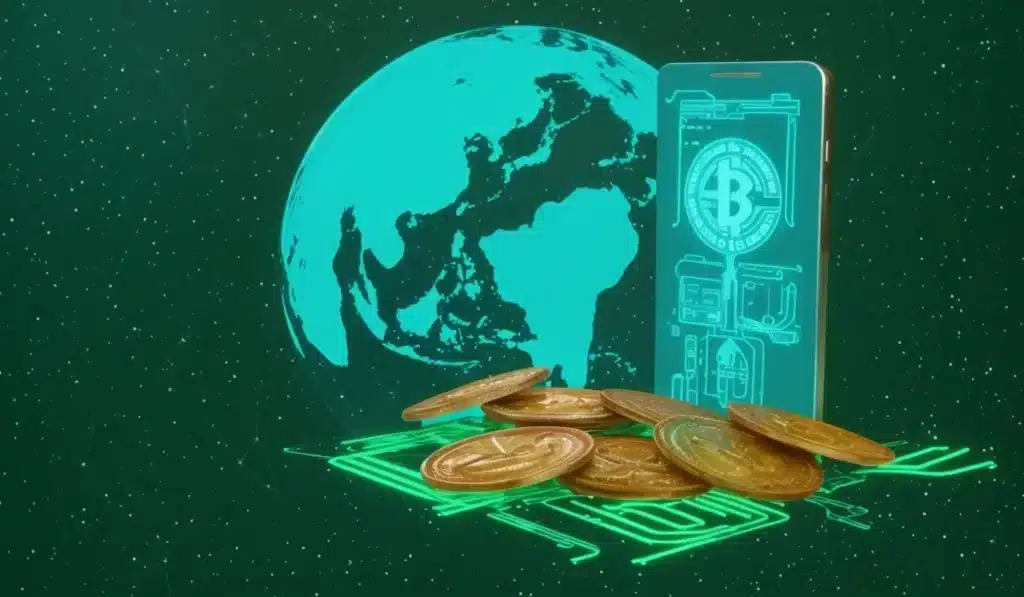
The shifts in Pakistan’s financial landscape, significantly influenced by the cryptocurrency economy and traditional methods like hawala, prompt urgent discussion. Understanding these changes can reveal critical insights into the evolving economic practices that many citizens are turning to today.
The Impact of Cryptocurrency Economy on Financial Transactions
As the world increasingly gravitates towards digital assets, Pakistan is experiencing a substantial change in financial interactions due to the emergence of cryptocurrencies. Unlike traditional banking systems that often involve lengthy approval processes, cryptocurrencies facilitate faster transactions which are especially beneficial for daily financial needs. Many individuals find that digital currencies offer a level of convenience that formal banking simply cannot match, particularly for remittances, where speed is paramount. It has been reported that crypto assets are allowing transactions to occur almost instantaneously, thus reshaping how Pakistanis view money transfer and financial operations in their daily lives.
This shift challenges the conventional systems in place. As state authorities struggle to regulate a rapidly growing cryptocurrency economy, the informal use of digital currencies often bypasses traditional financial channels, thereby limiting the banks’ reach. This raises questions about the long-term viability of Pakistan’s banking sector as individuals increasingly opt for the autonomy and perceived efficiency of cryptocurrencies, a trend observed in several regions worldwide. According to recent reports, the adoption of cryptocurrencies is fostering significant changes in how remittances are handled, which are crucial to Pakistan’s economy.
Challenges in Pakistan’s Formal Financial System
Despite technological advancements, the formal financial system in Pakistan faces substantial challenges that push individuals toward alternative methods like hawala and crypto transactions. One prominent obstacle is the slow transaction process experienced in conventional banking. Individuals often experience delays in fund transfers, which discourages them from utilizing formal channels. Additionally, strict regulations and bureaucratic hurdles can complicate basic financial dealings, making them arduous for average citizens.
These barriers contribute to a growing sentiment that the formal financial infrastructure is not user-friendly. Individuals are cancelling their banking contracts and shifting their focus to informal avenues that offer quicker solutions. As such, some analysts suggest that the complexity of the formal system is a critical factor pushing many into the underground economy. As noted in various studies, the hesitance towards formal banking is not solely a rebellion against the system but rather a strategic maneuver for efficiency and stability in an otherwise unpredictable environment.
The Rise of Underground Economy Practices
The long-standing practice of hawala, often seen as a relic of informal finance in Pakistan, is receiving renewed attention in light of the country’s economic difficulties. Hawala operates outside regulatory frameworks, providing an expedient alternative for money transfer, particularly appealing to those marginalized by the formal system. Historically significant, hawala continues to shape the financial landscape by accommodating individuals who seek speed and discretion in their transactions.
The underground economy not only underpins the livelihoods of many but also significantly impacts local businesses. Entrepreneurs often rely on informal financial channels due to their limited access to bank credit. The motivations behind using unregulated financial markets are often tied to necessity; the lack of viable options within the formal system compels individuals to adapt to existing alternatives that fulfill their immediate financial needs. In essence, this practice serves as a critical lifeline for many citizens and small business owners, despite its legal ambiguities. As the Daily Times reports, the infiltration of the underground economy poses significant risks to the overall economic stability of the nation.
Insights from Economic Experts
Financial analysts like Jawad Saleem provide vital perspectives on the implications of Pakistan’s evolving economic practices. He states, “Money is quietly exiting the formal system not because people want to break the law, but because the system designed to hold money is slower, harsher, and more unpredictable than the channels designed to move it outside”. Such statements underscore the increasing reliance on informal financial practices due to frustrations with the formal banking system.
Additionally, experts highlight the staggering financial losses attributed to these informal practices. Studies by the Global Financial Integrity estimate that Pakistan loses billions annually due to money flowing through unregulated channels. As Saleem asserts, the reality of Pakistan’s economy extends beyond government reports, revealing a stark contrast between the formal and informal sectors where “the real Pakistan today is not the one recorded in SBP bulletins or FBR reports”. Such insights illustrate the profound implications for not only individual financial circumstances but also the macroeconomic stability of the country.
Key Statistics on Financial Losses
The scale of financial losses in Pakistan’s underground economy is staggering. Over 6% of the GDP is attributed to tax losses associated with these informal practices, an amount larger than the annual defense budget, as emphasized by the International Monetary Fund. This erosion of public revenue has direct consequences on essential public services and infrastructure that depend on government funding. The misalignment between the economic realities faced by citizens and government statistics drastically highlights the issues at hand.
Furthermore, the consequences stretch beyond just loss of revenue; they inhibit the potential for economic growth that could stem from a more inclusive financial system. If reforms are not initiated to attract capital back into regulated channels, the economy risks stagnating while informal sectors continue to thrive unchecked. Each year, it becomes more critical to address these concerns so that tax reforms can lead to a healthier fiscal environment.
Alternative Financial Solutions
To confront these evolving challenges, potential reforms within Pakistan’s formal financial sector are essential. Innovations in financial technology present opportunities to bridge the gaps where traditional banking has failed. Implementation of digital wallets and blockchain technology could revolutionize how transactions are conducted, ensuring greater access for underbanked populations.
Furthermore, government and regulatory bodies must play a proactive role in supporting these advancements. By fostering an environment that encourages innovation while safeguarding against potential abuses, officials can help integrate the benefits of hawala and cryptocurrencies into a regulated framework. They could also consider streamlining processes, reducing bureaucracy, and enhancing digital literacy programs to empower citizens to utilize formal options. Only through collective effort can the financial landscape transition towards a model that includes every citizen.
The Future of Finance in Pakistan
The trajectory of hawala and cryptocurrency integration remains uncertain but promising. As user adoption of cryptocurrencies grows, regulators will have to find a balanced approach to ensure both innovation and safety. The emerging economy is characterized by a blended structure where traditional and modern methods coexist, and this dynamic can offer unique opportunities for economic recovery.
Ultimately, citizens must be educated on these financial instruments to better understand their benefits and risks. Increased awareness will equip individuals with the knowledge to make informed decisions, leading to a healthier economic future. As the country navigates these turbulent waters, the continuing evolution of the financial landscape will demand innovative solutions, regulatory responsiveness, and public engagement to capitalize on the benefits of both hawala and crypto assets.
About The Author




More Stories
Why Eliminating Capital Gains Tax Could Revolutionize Bitcoin Adoption
How Investors Are Using Yuan Stablecoins to Navigate Global Markets
Why Crypto Mortgages Are Set to Revolutionize Real Estate Financing