







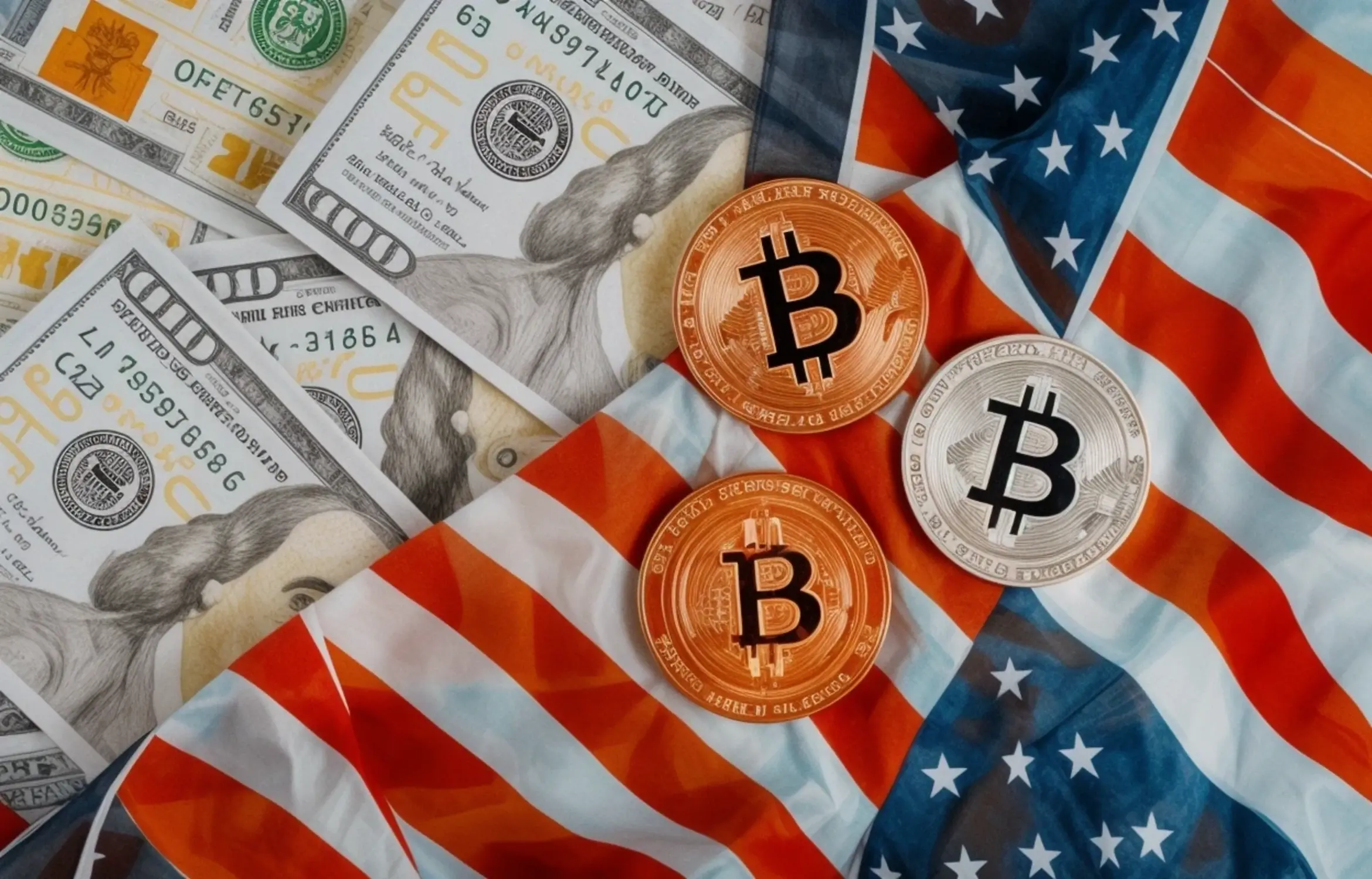
Bitcoin’s emergence as a competitor to the US dollar is reshaping the global economy, prompting reevaluation of fiscal policies and the future of currency dominance. Understanding Bitcoin’s role is crucial for investors and policymakers as it impacts inflation, reserve currency status, and economic confidence.
How Bitcoin Challenges Traditional Currency Models
Bitcoin fundamentally diverges from fiat currencies in several key areas. Unlike traditional currencies, which are backed by governments, Bitcoin operates on a decentralized blockchain technology. This structure promotes transparency and prevents manipulation, posing a significant challenge to centralized financial controls. Traditional currencies can be inflated or deflated at the discretion of monetary authorities, but Bitcoin’s limited supply (capped at 21 million coins) introduces a deflationary characteristic that stabilizes its value over time. As noted by recent analyses, Bitcoin’s finite supply could draw investors seeking a hedge against inflation and currency devaluation, thereby reinforcing its position against established financial systems.
The implications of Bitcoin’s value are profound. As Bitcoin gains popularity, it exerts downward pressure on traditional fiat currencies. For example, as more individuals and institutions buy Bitcoin, the demand for the US dollar may wane, potentially accelerating its devaluation. Brian Armstrong, the CEO of Coinbase, highlights this dynamic, pointing out that Bitcoin acts as a competitor to the US dollar, serving to check inflation and promote fiscal discipline among policymakers according to Coinbase CEO insights. This emerging rivalry compels currency authorities to rethink their strategies for maintaining economic stability in a rapidly changing landscape.
The Role of Bitcoin in Global Economic Reforms
Bitcoin stands at the forefront of potential economic reform, encouraging more responsible fiscal policies. Given its nature as a deflationary asset, Bitcoin provides a model for governments looking to implement stricter monetary controls. Countries with high inflation may turn to Bitcoin as a standard for accountability, ultimately impacting the way they govern fiscal policies.
Furthermore, Bitcoin could play a significant role in controlling inflation across major economies. By offering a decentralized alternative, Bitcoin incentivizes fiscal prudence; countries need to align their spending with the tangible value of Bitcoin instead of relying on fiat currency inflation. This shift in mindset fosters a more cautious approach to spending and financial management.
Moreover, Bitcoin’s decentralized framework could vastly improve cross-border transactions and international trade. Traditional systems are often riddled with fees and delays. In contrast, Bitcoin enables faster, cheaper, and more secure transactions, reducing the friction of capital movement between countries. This efficiency can encourage global trade, potentially reshaping how countries interact economically.
Coinbase CEO’s Perspective on Bitcoin and Global Economy
Brian Armstrong recently expressed critical insights regarding Bitcoin’s competition with the US dollar, emphasizing the need for policymakers to maintain fiscal discipline. His assertion that Bitcoin serves as a vital check against inflation resonates with investors and market analysts as observed in his latest discussions. Armstrong stressed that by providing a competitive alternative, Bitcoin indirectly helps to strengthen confidence in the US economy amid concerns over the rising national debt.
Armstrong described how excessive spending could undermine the trust placed in traditional currency systems, potentially jeopardizing the US dollar’s status as the world’s primary reserve currency. His views underline the importance of leadership voices in shaping public perception about Bitcoin’s role as an economic stabilizer among uncertainties, making it a significant player in ongoing discussions about monetary policies and future economic strategies.
The Impact of Bitcoin on Reserve Currency Status
The potential of Bitcoin to transition into a reserve currency is both thrilling and daunting. Currently, the US dollar reigns supreme as the world’s leading currency, but rising national debts and inflationary pressures challenge this dominance. With US national debt increasing alarmingly—by approximately $70,843 per second—investors and governments alike are beginning to consider alternatives. Bitcoin, as a decentralized asset, could emerge as a legitimate contender for reserve status in light of these factors.
Market predictions indicate that should Bitcoin continue to gain acknowledgment as a store of value, its role could evolve fundamentally. The discussions are intensifying regarding whether Bitcoin could play a supplementary role alongside traditional currencies or, potentially, become the new standard bearer. As experts note, Bitcoin’s unique properties may align it closely with the needs of modern economies grappling with excessive debt levels as highlighted in recent analyses.
Current Trends in Cryptocurrency Adoption
Recent trends reveal a rapid increase in Bitcoin adoption across the globe. Countries like El Salvador have embraced Bitcoin on a national scale, signaling a major shift in the acceptance of cryptocurrencies. As Bitcoin gains traction, the role of stablecoins in the ecosystem has also intensified, serving as a bridge between traditional currencies and cryptocurrencies.
With the stablecoin market currently valued at approximately $312.6 billion, experts expect it to grow exponentially, possibly reaching $2 trillion by 2028. This growth indicates a burgeoning acceptance of digital assets, backed by stable values, attracting investors and users who may have once hesitated to engage with more volatile cryptocurrencies. Furthermore, ongoing regulatory changes are influencing cryptocurrency markets positively, fostering trust and security among potential users.
What Investors Should Know About Bitcoin’s Future
For investors navigating the uncertain waters of Bitcoin and the broader economic landscape, several practical tips can enhance their strategies. Understanding market trends and signals is fundamental. Investors should keep abreast of economic indicators, which may significantly influence Bitcoin prices. Moreover, examining global trends such as inflation rates and government spending patterns can provide essential insights into potential market directions.
During periods of economic turbulence, Bitcoin often serves as a refuge for investors seeking stability. By diversifying portfolios to include Bitcoin, savvy investors can hedge against inflation and devaluation of fiat currencies, placing themselves in a stronger position for potential gains. However, it’s critical to approach Bitcoin investment with a solid grasp of regulatory frameworks to avoid unforeseen challenges.
Building a Framework for Responsible Cryptocurrency Use
As the cryptocurrency landscape evolves, strategies for responsible investment in Bitcoin and other digital assets must be prioritized. Investors and stakeholders need to understand the regulatory environment, as well as the legal nuances that govern cryptocurrency use in various jurisdictions. Educating investors about these factors can promote ethically sound investment practices.
Community-led initiatives are essential in ensuring the ethical use of cryptocurrencies. As Bitcoin becomes more ingrained in the financial fabric, fostering discussions around ethics, regulation, and responsible usage will ensure a healthier ecosystem. By promoting best practices and transparency, the industry can mitigate risks associated with digital currencies and capitalize on their potential benefits.
To summarize, Bitcoin’s competition with the US dollar is changing the face of the global economy. It is evolving from a fringe asset to a pivotal component of modern finance, reshaping how currency, investment, and economic stability are perceived.
About The Author




More Stories
Why Eliminating Capital Gains Tax Could Revolutionize Bitcoin Adoption
How Investors Are Using Yuan Stablecoins to Navigate Global Markets
Why Crypto Mortgages Are Set to Revolutionize Real Estate Financing